Text by Juliette following the artistic trip led by the L'Enveillée team to Madagascar in August 2025, shared in the company’s September 2025 newsletter
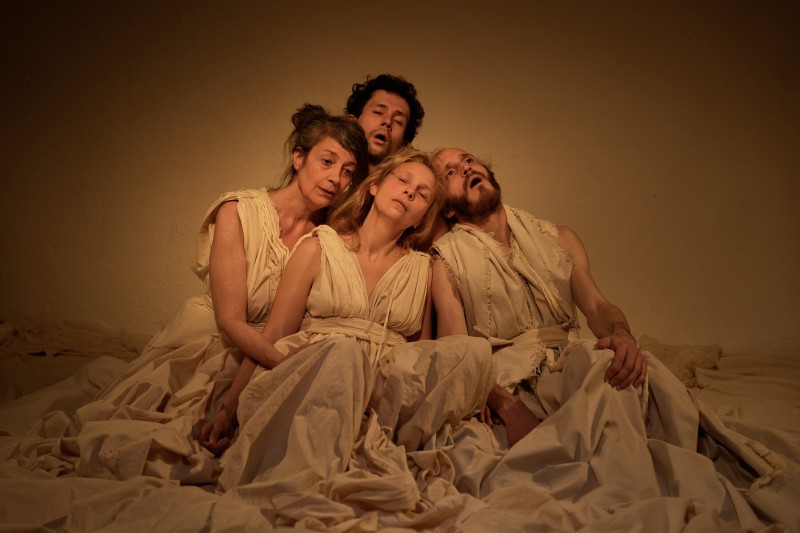
There were five of us: myself and the performers in the work-in-progress L’Enveillée (Sylvain Manet, Roxane Palazzotto, Victor Parente, Carole Verhaeghe). Above all, I realize how fortunate we were to be able to integrate such a research trip into the creative process of a production, and to experience it as a team, rather than as a director’s solitary quest. I have always believed that theater must emerge from life—from a profound and deeply moving experience of life—even though it must respond to it in a way that is absolutely not realistic or naturalistic, but through a gesture that is entirely poetic and, in the literal sense of the term, artificial. Felt, then crafted, conceived, and built—just as a craftsman uses raw materials to create an object, a home, or a temple. So yes, for the purely artistic act to arise from a real, lived, and sensitive relationship with the subject it addresses—this has always been, for me, a necessity, an inner ethic before embarking on any creative path. That is also why, during our work on this performance about death and funeral rites, we spent time at a hospice, sharing the final moments of strangers who, through a song, a text, or a moment of silence, became unforgettable encounters. That is why we dreamed of spending a few weeks in a country where death is still celebrated through powerful rituals, where death is sung and danced, and where grief is spoken of openly. Our dream came true, and our gratitude is immense.
Yes, it was an encounter with Madagascar that took place. Three and a half weeks is not much time in such a rich land—just as it would have been in any new land. But the encounter, though brief, was intense, beautiful, stirring, and instructive. We were able to have two major experiences, and it is these that I will try to tell you about. Each of these experiences unfolded through several encounters. The first was witnessing the famadihana ritual in the Highlands, generally translated as “turning of the dead.” The second was getting up close and personal with traditional singers, the saïry from southern Madagascar.
We witnessed two famadihana ceremonies with two different families from the Betsileo ethnic group. Several years after the death of one of them, the relatives gather to pay tribute to him during this ritual, which also celebrates his transition to the status of razana, “ancestor.” The deceased is taken out of the family tomb, wrapped in the shrouds in which he was buried, and then rewrapped, over these, in new shrouds. Centered around this pivotal moment, the family organizes a celebration—a large feast—attended by villagers from the surrounding area, close relatives, and family members coming from the other side of the world. But I do not wish to dwell on the description of this rite, which we have shared only twice and which I would not want to confine to a description that would inevitably leave so much out. Rather, I’d like to share with you what this experience opened up within us.
This particular act, it must be acknowledged, may seem so strange, so distant, so different to us. It is obviously impossible for us to have experienced it with the same inner intensity as the people who were performing it. And yet, we were there, and it was imbued with immense simplicity, fluidity, and a sense of naturalness. We saw the family of the living blessed with kind words—words that sprang both from a deeply rooted oral tradition and were entirely unique, tailored to the present and singular situation. To bless the living is at the same time to pay tribute to the deceased. Blessing the continuation of their lives—and in particular, for the widow or widower of the person being honored—freeing them from the bonds of marriage, publicly declaring that the mourning period is over and that the person may find love again and live life to the fullest once more. I must say, the act of formalizing this moved me deeply. Yes, the act of closing the period of mourning and opening a new phase of life—during a powerful celebration, as festive as it is moving—to usher in a new stage in the relationship with the deceased (whether a brother, an uncle, a mother...) and to do all this with great tenderness and love, for the living as well as for the dead—yes, that deeply moved me. I’m not saying that psychological or emotional transformation is necessarily instantaneous; but this is witnessing a rite that truly acknowledges and addresses a psychological need—that of bringing mourning to a close and transforming one’s bond with the deceased—and which, it seems to me, can genuinely support this process. To strengthen it, perhaps even allow it to be fully realized. The outward, collective, ritual act serves as both a means and an outcome of an inner realization. The fact that I’ve maintained ties with the families who so generously welcomed us during these ceremonies, that I continue to stay in touch with them, and that I’ve heard from many people how the famadihana was an essential step in their grieving process—and how it brought them genuine peace—allows me to share this with you here. And to tell you how this resonates with me as a lesson, in a society where we must, as best we can, “struggle” alone with our inner processes—alone and without action, without a gesture made in the world and in the material realm, without formal beauty. More and more, I believe that giving form to things—noble matter, all the tangible elements that constantly surround us—is precisely a way of not allowing ourselves to be confined by matter, and a way of honoring that which is not matter, that which is invisible and elusive to us. Hence the importance of the physicality of ritual acts and our relationship to death, which is, par excellence, that of which we know nothing—that which is submerged in the ocean of mystery and the intangible.
Such is the case with these shrouds—ideally made of raw silk or cotton—that families offer and with which, all facing the ground together, they re-wrap the tangible remains of their loved ones. The gestures are simple and concrete, and before our eyes appears an image that belongs to all times and all places: that of the cycle of births and deaths, of which we are all a part. The cycle of human generations, extending beyond the single family present here—this incredible journey through time in which we are embarked for the duration of our existence—and at that moment, it seems to have been this way since time immemorial and for all eternity. It is a myth that repeats itself endlessly. This idea, this stepping outside of “contemporaneity” to experience a perpetual time, a unique and repeating cycle, which usually emerges during deep meditation, now takes shape, right here and now, in the gestures of these twenty- and thirty-year-old grandchildren, learning from their fifty- and sixty-year-old fathers and mothers how to wrap their grandmother, with this fabric, this string, this attentiveness to the other’s gesture. This idea takes shape in this woman who holds her three-year-old grandson by the hand, who says to him, “Come, I’ll introduce you to my mom,” and who leads him to place his little child’s hand on the great-grandmother’s renewed shroud.
Evening is falling and the moon is bright. To the deceased who has just been honored, a man who is not a family member—and who seems to be a pillar of the ritual—says, “Now you must bestow blessings upon your family.” [This is said in Malagasy, and we don’t realize it at the time. It is only later, when speaking with the family again, that I will learn this.] The world of the living and the world of the dead—even if we acknowledge that they are indeed separate and that it is good for them to be so—have opened a passage to meet during the celebration, which closes just as the heavy stone seals the tomb.
And then we sang—a few of the songs we had in our repertoire, more or less from our own regions, some of which are for the dead and some of which are not; and when they are for the dead, they are rarely sung anymore—but here we are, we have them in our repertoire and we share them. And they respond with songs—songs of this ethnic group—that almost everyone knows, sung for many different occasions, from wake services to weddings, births, or work. We sing, they sing; we sing, they sing. Night falls, and each time we leave a family that has welcomed us with open arms, with whom, in a day or two, we have shared a piece of what truly matters.
Many other reflections and emotions opened up to us as we experienced these two famadihana, and they continue to resonate. I hope that through these few words of sharing, a path may also open up within you, whatever its flavor or form.
Then we headed south, left the RN7, and drove toward Androy, one of the most remote regions of Madagascar.
I’ll skip over the twists and turns of the journey, the condition of the roads, the expanses of cacti, thorny bushes, and baobabs crisscrossed by herds of zebu, the young people walking with spears or machetes in hand, the laughter and the scares.
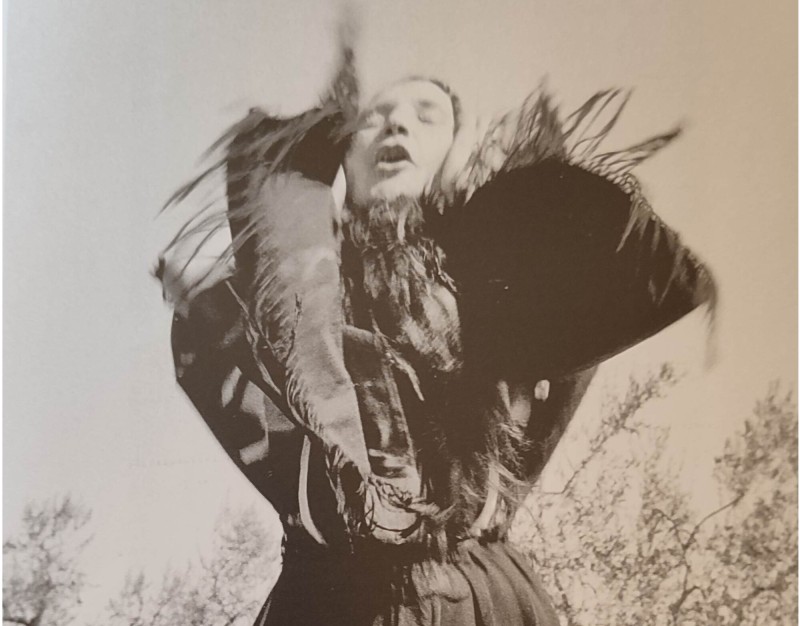
There, we did not experience any funeral rites. We went to meet male and female singers who perform during these rituals. These “saïry” are not merely “artists,” but truly fulfill a “role”—social, ritual, and spiritual. We were able to meet singers of “beko,” the musical style specific to the Antandroy ethnic group, and of “sarandra,” that of the Antanosy ethnic group. To be so close to them. To feel the power of their songs and the act of their singing. These people have been singing since childhood. It is their lifeline, what they are meant to do. A gift, a mission, a responsibility—even if they may also earn a living through farming or herding... They are fully dedicated to a musical style that takes on its full meaning during various ceremonies—social and spiritual milestones experienced collectively—and above all during funeral rites. The singing accompanies the spirit of the deceased while simultaneously comforting the living.
Music is not mere decoration; it serves a purpose. And it is beautiful—oh, how beautiful and powerful it is, of course! And to find oneself so close to musicians of this caliber—who excel in their own musical repertoire while being completely imbued with the meaning inherent in the act of singing, a meaning that goes far beyond musical beauty, or rather, I would say, a meaning that relies entirely on musical beauty and the poetic power of language to fulfill a function such as connecting worlds… a function of reharmonization, of healing, of crossing thresholds… this is something our bodies and hearts have received—and, it must be said, something we rarely get to experience in our part of the world, where art has almost entirely detached itself from its original ritual function. And that is where we are, and that is what we work with, and it is not a matter of being anything other than what we are. But the experience of such a vibration reminds us how much meaning things hold and how it is possible to reawaken that meaning. Our form will never be the same, and that is not the point. We create performances, not rituals in the literal sense, and that is clear to me. We already knew, of course, that we did not create performances to “please ourselves,” or even for the “pleasure” of the audience. Encountering traditional artists of such wholeness—for yes, it is also the wholeness of their movements, their presence, and their performance that moves me deeply—only confirms why we do what we do, in the form and in the era that are our own.
I cannot write much more about these encounters, for they are essentially about vibration and listening. They continue to permeate me and leave a deep impression on me. And although our own theatrical performance will be entirely artistic—written and crafted in the noble sense of the term—and will for nothing in the world claim to be what it is not—whether a ritual or a song from Madagascar or any other land that still knows how to resonate with its dead, to accompany them, to watch over them, to touch them—yes, we hope it will be deeply nourished by this, in its deepest, most invisible layers—and that it will succeed, in its own way, in opening up within those who come to share it perhaps a new space, a dimension in their soul that is known but perhaps forgotten, which they may summon or open anew when death and mourning burst into their lives or into the life of a loved one. It’s true, we hope for that.
And that we, children of the West—which, of course, has its own beauties and riches, but which, it must be said, has almost completely forgotten how to deal with death and the pain it brings, and which, it must be said, is at a loss on this subject— we went to this land in the Southern Hemisphere to encounter a bit of all that—it’s a kind of astonishing grace made possible, too, by the times we live in. So in these times, how can we reconnect a little with what binds us all together? How can we come together—beyond the (necessary!) differences in forms and gestures—and re-educate ourselves around a shared experience? ..? That’s part of what we sought—and, above all, it’s what continues to weave itself together, to move us, to shift us, to transform us.
Thank you, Madagascar.