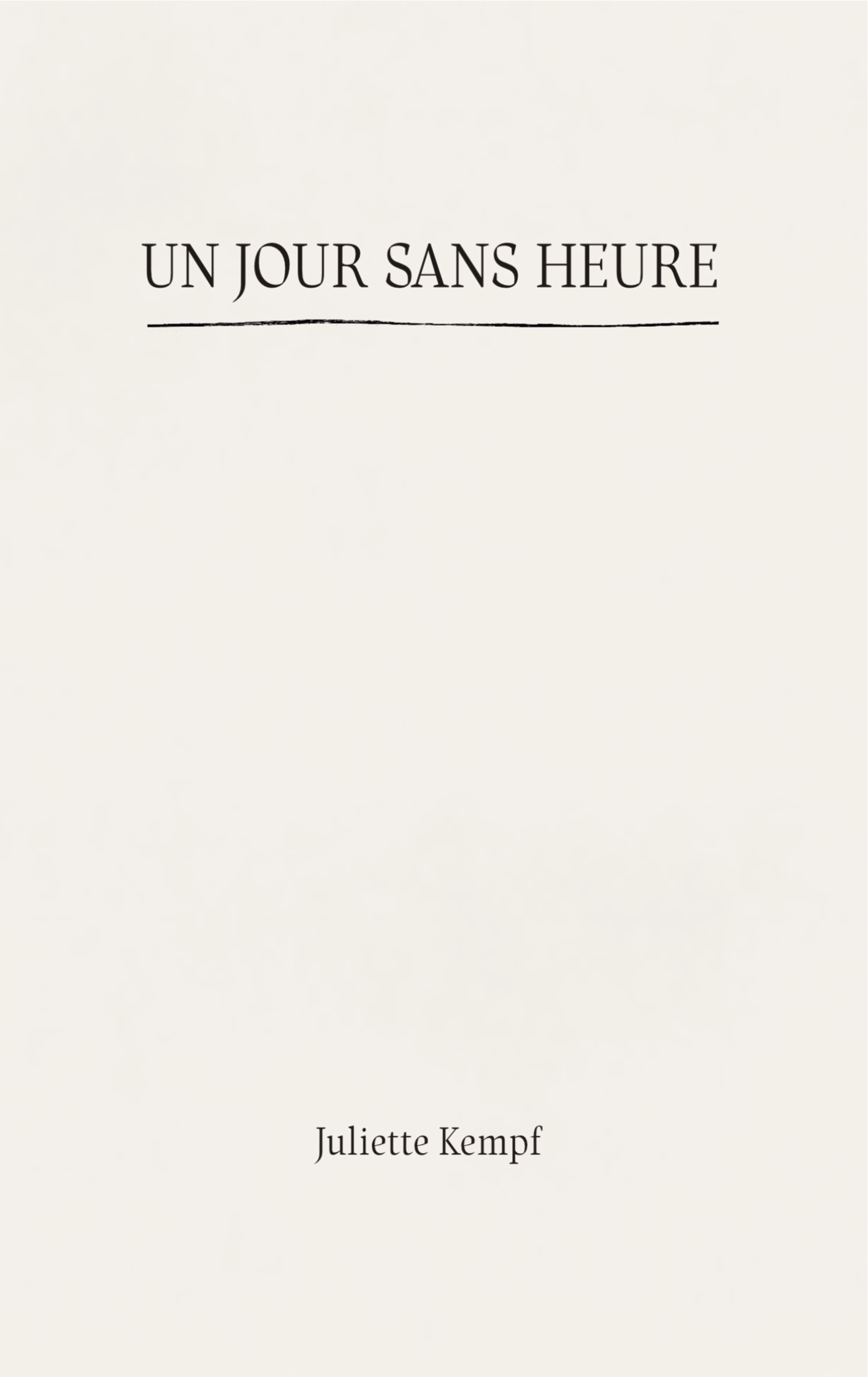
A poetry collection by Juliette Kempf, inspired by encounters at a hospice, published by Le Désert en Ville
Foreword to the collection
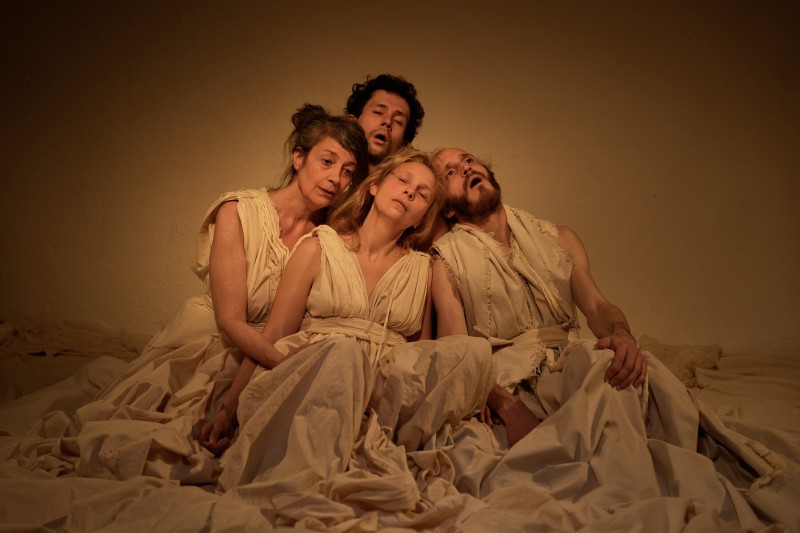
In 2023, I embarked on a creative journey to develop a performance that would explore the theme of death through the songs and rituals that accompany it. This performance is called L’Enveillée, and as I write these lines, we are 40 days away from its premiere, which will take place in Nantes. Its origins date back many years, particularly to a pivotal moment in 2019: when I had the privilege of keeping vigil over my grandmother throughout the very first night of her passing, at her home, while singing. Another moment—one I did not experience firsthand—left a deep impression on me. It was in 2017, when a beloved uncle passed away while a cellist played by his side in the hospital where he was staying. And there have been others—which I won’t recount in full here—where we were able to honor that transition, that space between presence and absence, despite the pain and even in the midst of it.
In my view, embarking on a creative journey exploring such a theme could not happen without spending time—alongside the cast of actor-singers who would bring the show to life—immersed in the reality of death, the dying process, and rituals. I wanted us to visit a palliative care center to share art and beauty at a time when death is approaching and that process is accompanied with full awareness. That is how the connection was forged with the Maison de Nicodème in Nantes, which supports end-of-life care by placing essential importance on the presence of families and art. It works to ensure that a place for the end of life is also—and above all—a place of life.
Between August 2024 and March 2025, I visited the center several times, each time with one of my friends and fellow artists from L’Enveillée: Sylvain Manet, Carole Verhaeghe, Victor Parente, and Roxane Palazzotto. We met with patients and their families, sang for them, and recited poetry, weaving song and verse together. We experienced moments of life and shared connection of rare intensity, richness, and tenderness.
Often, a poem would emerge from an encounter with a person. It would come in the moment, through spoken word. That evening, I would write it down on paper and give it to them the next day—or to their family if the person had passed away in the meantime.
From these encounters—the images and states of presence that inhabited them, along with my reflections on the passage of death and on grief—other texts were born. Together with the texts that sprang forth in the moment at the Maison de Nicodème, they make up the collection titled Un jour sans heure.
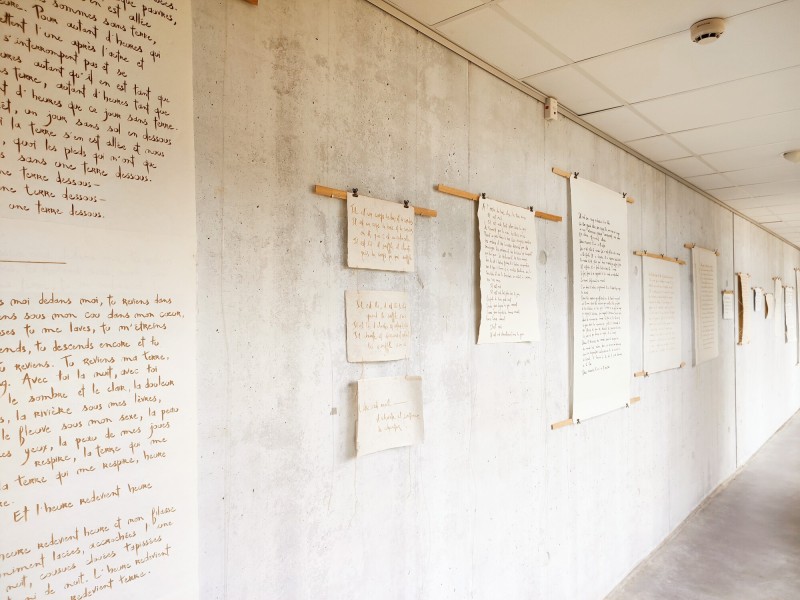
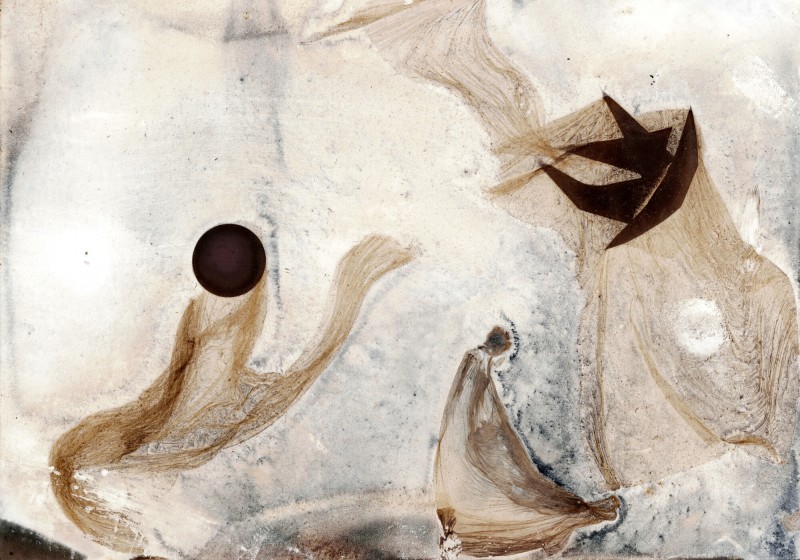
In addition to the small book you hold in your hands, the texts take the form of an exhibition where the written word meets the living material of handmade paper, on display for the first time at the Maison de Nicodème in the spring of 2026.
I experience poetry as speech, and I invite you to read it—or to speak it—within your innermost self, within your own day.
Juliette Kempf, February 2026
Extraits de textes
À l’orée du bois, elles, les trois amies.
Il est midi.
Il est midi tout plein dans le jour.
Se tiennent par la main, les trois amies.
Posent un pas dans le bois.
Les visages inondés des ombres et des lumières dessinées par les branchages.
Des ombres et des lumières qui dansent sur leur peau.
Se déchaussent, les trois amies.
Sur le sol d’herbes fraîches et d’herbes craquantes, sur le tapis d’humus et de ramilles tombées, sur la terre-herbe et sur la terre-bois, se mettent à courir, les trois amies.
Il est midi.
Il est midi tout plein dans le jour.
[...]
Un pays de terre et de larmes.
C’est un pays de terre et de larmes où je me trouve maintenant.
Chez nous les larmes sont une soif de vivre, les larmes sont une soif d’aimer.
Toi l’amie de l’autre terre, tu dis que chez toi il n’y a pas de larmes -
Tu dis cela, n’est-ce pas, qu’il n’y a pas de larmes chez toi -
Comment traversez-vous la douleur et comment traversez-vous l’amour,
si ce n’est des larmes qui noient votre corps, si ce n’est de votre corps tout entier irrigué par les larmes -
[...]
Il met son visage au-dessus d’un lac.
Un lac grand clair, son visage, lui, un rire son visage, un rire silencieux, presque transparent, une peau fine, claire, infiniment claire.
Deux miroirs l’un à l’autre.
Ici n’est plus le monde. Ici n’est plus ni le monde ni la foule. Il a disparu, il a disparu tout entier le monde. N’est plus que deux miroirs qui se font face. Il a fondu, il a fondu tout entier le monde.
[...]
→Buy the book